A Contractor’s Guide to Choosing Between Mahogany Timber and Mvule Timber Hardwoods
Mahogany vs Mvule: Which Timber Is Better for Kenyan Projects? Choosing the right hardwood can make a significant difference to a construction project's finish, durability, budget and long-term maintenance. For Kenyan contractors, the question of mahogany vs mvule which is better comes down to more than colour or purchase price. You need to consider the intended application, timber quality, moisture content, dimensions, workmanship and the environment in which the finished product will be installed.
Mahogany is a strong candidate for refined interior joinery, furniture, doors and decorative work, particularly when the brief calls for an elegant grain and a smooth finish. Mvule, commonly associated with Milicia excelsa, offers a denser, naturally durable hardwood option for demanding joinery and applications where resistance to wear matters. These are general distinctions rather than guarantees: species identification, individual board quality and preparation affect actual performance. See the African mahogany technical profile and the International Tropical Timber Organization's mvule-related species information.
For projects in Nairobi and elsewhere in Kenya, the practical decision is straightforward: select the timber that meets the design and performance specification, then compare quotations for equivalent dimensions, grades and moisture conditions. Mastercraft Timber & Hardware can support this process by helping contractors assess the requirements for doors, frames, floors, ceilings and custom joinery before committing to a material schedule.
Understanding Mahogany and Mvule Timber
What defines mahogany timber?
Mahogany is a commercial wood name used for several species, not one universal material. African mahogany is commonly associated with the Khaya genus, whose species differ in density, strength and other characteristics. The wood typically ranges from pinkish or reddish brown to deeper brown, with a grain that can produce an attractive figure under a clear finish. Its workability makes it a popular option for cabinetry, furniture, interior joinery and decorative applications. However, mahogany should not automatically be treated as the most durable hardwood in every environment: published profiles describe African mahogany as moderately durable, with performance varying by species and conditions. Source: The Wood Database — African mahogany.

For contractors, the key is to confirm exactly what the supplier means by mahogany. Ask for the commercial or botanical identification where available, the grade, the dimensions and the moisture condition. If the project specifies a particular species, do not substitute another wood simply because it carries the same market name. This is especially important for projects with repeated door designs, visible grain requirements or performance specifications. A reliable material schedule describes the timber by measurable requirements rather than relying on a broad label alone.
What makes mvule different?
Mvule is a valued East African hardwood commonly identified as Milicia excelsa. It is also known internationally as iroko. Published species data describe its heartwood as yellow-brown to darker brown, with a medium-to-coarse texture and frequently interlocked grain. The International Tropical Timber Organization reports an air-dry density of approximately 0.65 g/cm³ for Milicia excelsa at 12% moisture content, while PROTA describes a broader density range of 550–750 kg/m³ at the same moisture reference. These figures illustrate natural variation rather than a guaranteed value for every board. Sources: ITTO and PROTA.

Mvule's combination of density and natural durability makes it worth considering for flooring, high-quality joinery, furniture and other applications where wear resistance is important. Its interlocked grain can require careful machining, and individual boards may differ in colour and figure. Contractors should also recognise that density alone does not establish structural suitability: a timber element must meet the relevant design loads, grading requirements, dimensions and connection details. Mvule is therefore a performance-led choice, not an automatic replacement for every other hardwood.
Mahogany vs Mvule: Side-by-Side Comparison

The following table summarises the practical differences. Species descriptions are drawn from the published technical references linked above; recommendations for particular building components are application guidance, not a claim that every board will perform identically.
|
Factor |
Mahogany |
Mvule |
|---|---|---|
|
Appearance |
Commonly reddish or pinkish brown; attractive grain and figure |
Commonly yellow-brown to darker brown; often a coarser, interlocked grain |
|
Density and strength |
African mahogany density varies by species; one profile reports approximately 545 kg/m³ dried weight |
Published Milicia excelsa data commonly centre around 590–660 kg/m³, with wider reported variation |
|
Workability |
Generally easy to machine; interlocked grain may cause tear-out |
Generally workable, but interlocked grain and local material variation call for sharp tooling |
|
Finishing |
Suitable for clear finishes, stains and polished joinery |
Suitable for quality joinery finishes; assess grain, surface preparation and product compatibility |
|
Common uses |
Doors, furniture, cabinets, decorative joinery and interior components |
Joinery, furniture, flooring, stairs and other demanding applications |
|
Cost in Nairobi |
Estimate: KES 2,020–2,690 per foot for 100 × 75 mm sawn mahogany |
Estimate: KES 1,550–2,065 per metre for 100 × 75 mm sawn mvule/mninga |
|
Sourcing and sustainability |
Verify species, origin and lawful sourcing documentation |
Verify species, origin and lawful sourcing documentation |
|
Kiln-drying |
Must be dried to the intended service conditions; verify actual moisture content |
Species data describe favourable drying behaviour, but every delivery still needs moisture checks |
|
Recommended applications |
Refined doors, visible joinery, cabinetry and interior design features |
Wear-conscious joinery, selected flooring, stairs and robust furniture |
Density figures are indicative published species values, not acceptance criteria. Price estimates are based on a 2026 Nairobi and Central Region construction-cost reference and are not Mastercraft quotations. Rates are VAT-exclusive where indicated by the source. Cost reference.
The comparison shows why a simple winner is misleading. Mahogany can be the better choice when the design depends on a particular colour, refined grain and easy finishing. Mvule can be more appropriate when the project prioritises a dense hardwood and natural durability. In both cases, proper seasoning, machining, installation and maintenance determine how well the timber performs.
Which Hardwood Is Stronger and More Durable?
The question “Mahogany vs mvule which is stronger?” needs a technical answer. Strength can mean resistance to bending, compression, impact, surface indentation or a particular structural load. Those properties are measured separately, and a density figure cannot substitute for structural grading or engineering calculations.
Published profiles of African mahogany report a dried density around 545 kg/m³ for one commercial species profile, while mvule's density commonly falls in a higher range. That supports treating mvule as the denser option in many comparisons, but it does not prove that every mvule board is stronger than every mahogany board. Species differences, knots, grain direction, moisture, defects and board dimensions affect the performance of the finished component. African mahogany data and mvule data.
Durability is a separate question. PROTA describes Milicia excelsa as naturally durable, with limited movement in service once properly dried. African mahogany profiles commonly describe moderate decay resistance, although the precise performance varies by species. For doors, floors or frames exposed to moisture, contractors must still account for drainage, ventilation, the risk of water ingress and appropriate protective finishes. A naturally durable species cannot compensate for a detail that repeatedly traps water.
For structural members, use the applicable design requirements and verified grading information. Kenya's National Building Code 2024 provides the regulatory starting point for construction compliance. The practical rule is to specify the required performance first, then choose a timber that can demonstrably meet it.
Mahogany vs Mvule: Which Is Cheaper in Kenya?
The search “Mahogany vs mvule which is cheaper” cannot be answered reliably without comparing equivalent sizes and grades. The same species may have different prices depending on board thickness, width, length, quality, drying, machining, wastage, transport and whether the timber is sold sawn or planed.
A 2026 construction-cost handbook provides the following indicative Nairobi and Central Region rates. These are budgeting references rather than live retail offers, and they should not be interpreted as the current price of every kiln-dried product.
|
Timber specification |
Unit |
Estimated price (KES) |
Price basis |
|---|---|---|---|
|
Sawn mahogany, 100 × 75 mm |
Metre |
2,020–2,690 |
Nairobi/Central Region, 2026 estimate |
|
Sawn mvule/mninga, 100 × 75 mm |
Metre |
1,550–2,065 |
Nairobi/Central Region, 2026 estimate |
|
Wrought mahogany, 100 × 25 mm |
Metre |
1,080 |
Nairobi/Central Region, 2026 estimate |
|
Wrought mvule, 100 × 50 mm |
Metre |
3,590 |
Nairobi/Central Region, 2026 estimate |
|
Wrought cypress, 100 × 50 mm |
Metre |
800 |
Nairobi/Central Region, 2026 estimate |
Source: 2026 Construction Costs Handbook — Kenya. The rates are not all directly comparable: the wrought mahogany and mvule entries use different cross-sections, and the source does not establish that every rate refers to the same grade or drying specification. All prices should be reconfirmed with suppliers before procurement.
For an accurate comparison, request two quotations using the same dimensions, grade, moisture-content target, finish and delivery location. Ask whether the quoted rate covers planing, cutting, treatment, VAT and delivery. Then calculate the cost of usable material rather than comparing the initial purchase price alone.
For example, a lower-priced board that needs substantial trimming, rejects or additional machining may cost more per finished door frame than a better-prepared board. Equally, an expensive hardwood may be unnecessary for a ceiling detail that does not require its particular properties. Cost control begins with matching the material to the job.
The Importance of Kiln-Dried Timber
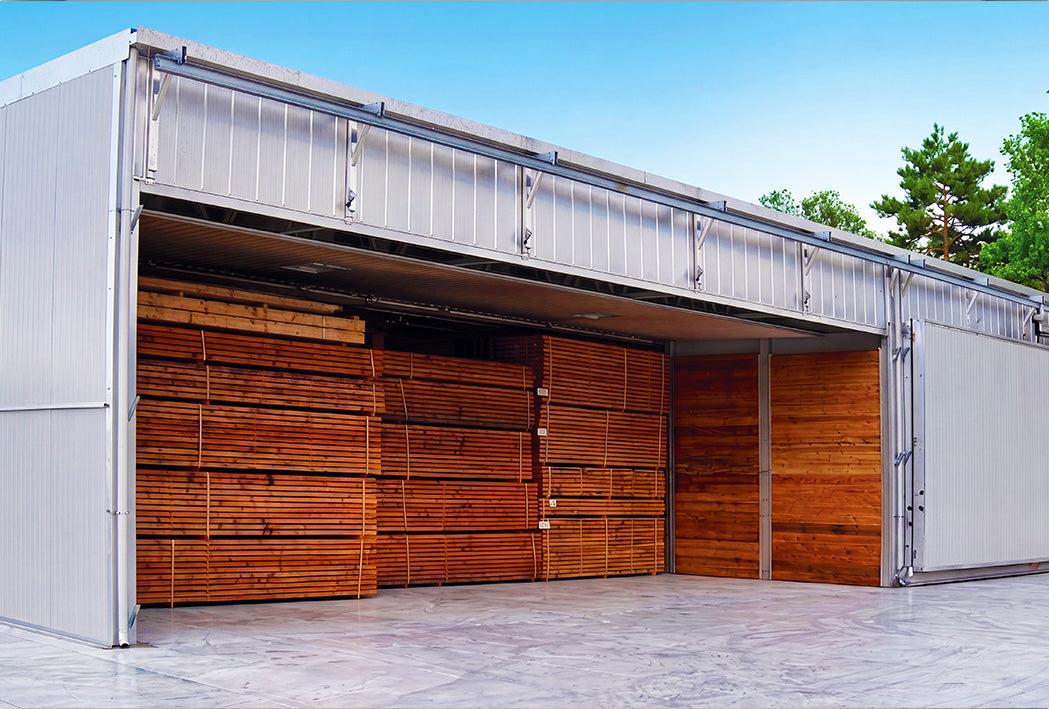
Kiln drying removes moisture from timber under controlled conditions. The objective is to bring the wood towards a moisture content suited to its intended service environment, reducing the risk of excessive movement after installation. Wood continues to exchange moisture with the surrounding air, so kiln drying does not make timber permanently immune to swelling, shrinkage or warping. The ISO 13061-1 moisture-content standard describes the oven-drying method used to determine moisture content for physical and mechanical testing.

Kenyan construction specifications provide useful local reference points. A published government tender specification calls for average moisture content not exceeding 12% for joinery and 20% for carpentry, and requires a moisture meter to be available for checking deliveries. Another public technical specification gives limits of 12% for joinery and 18% for carpentry. These are examples of project specifications, not a universal rule that overrides the contract or the timber's intended service conditions. Sources: government tender specification and Kenya Power specification.
When buying kiln-dried hardwood in Kenya, ask for the actual measured moisture content, not simply a verbal assurance that the timber is dry. Check several boards and, where appropriate, several positions on each board. Store deliveries off the ground, under cover and with adequate airflow, following the supplier's handling guidance. Before fitting doors or flooring, allow the material to acclimatise to the installation environment as required by the product specification.
Choosing Timber for Doors, Frames, Floors and Ceilings
The right species depends on how the component will be used, what it must withstand and how visible the finished wood will be. A front door exposed to weather has different requirements from an internal bedroom door; a heavily used floor has different demands from a decorative ceiling. Contractors should specify the whole component, including its finish, hardware, fixing method and exposure conditions.
Best hardwood for doors and frames
Mahogany is a strong candidate for premium internal doors, decorative panels, cabinetry and door sets where a consistent, refined finish matters. Its workability can support detailed mouldings and clean profiles. For external doors, species selection must be paired with suitable construction, moisture management, weather protection and a finish system intended for the exposure. The choice should also account for the design's stability requirements and the quality of the available boards.

Mvule is worth considering for robust doors, frames and high-use joinery where its density and durability are useful. Its machining characteristics may require careful tooling and finishing, particularly where the grain is interlocked. In either case, confirm the door's thickness, frame sections, hinge and lock requirements, clearances and installation details before cutting timber. A premium species cannot correct undersized frames, poor joints or badly installed hardware.
Best timber for floors and ceilings
For hardwood flooring, mvule is a candidate where wear resistance and a rich natural appearance are priorities. The boards still need to be suitable for flooring manufacture, correctly dried and installed over a properly prepared substrate. Moisture from the subfloor, inadequate expansion allowances and poor ventilation can undermine a flooring installation regardless of species. A contractor should confirm the flooring system's installation requirements before ordering.

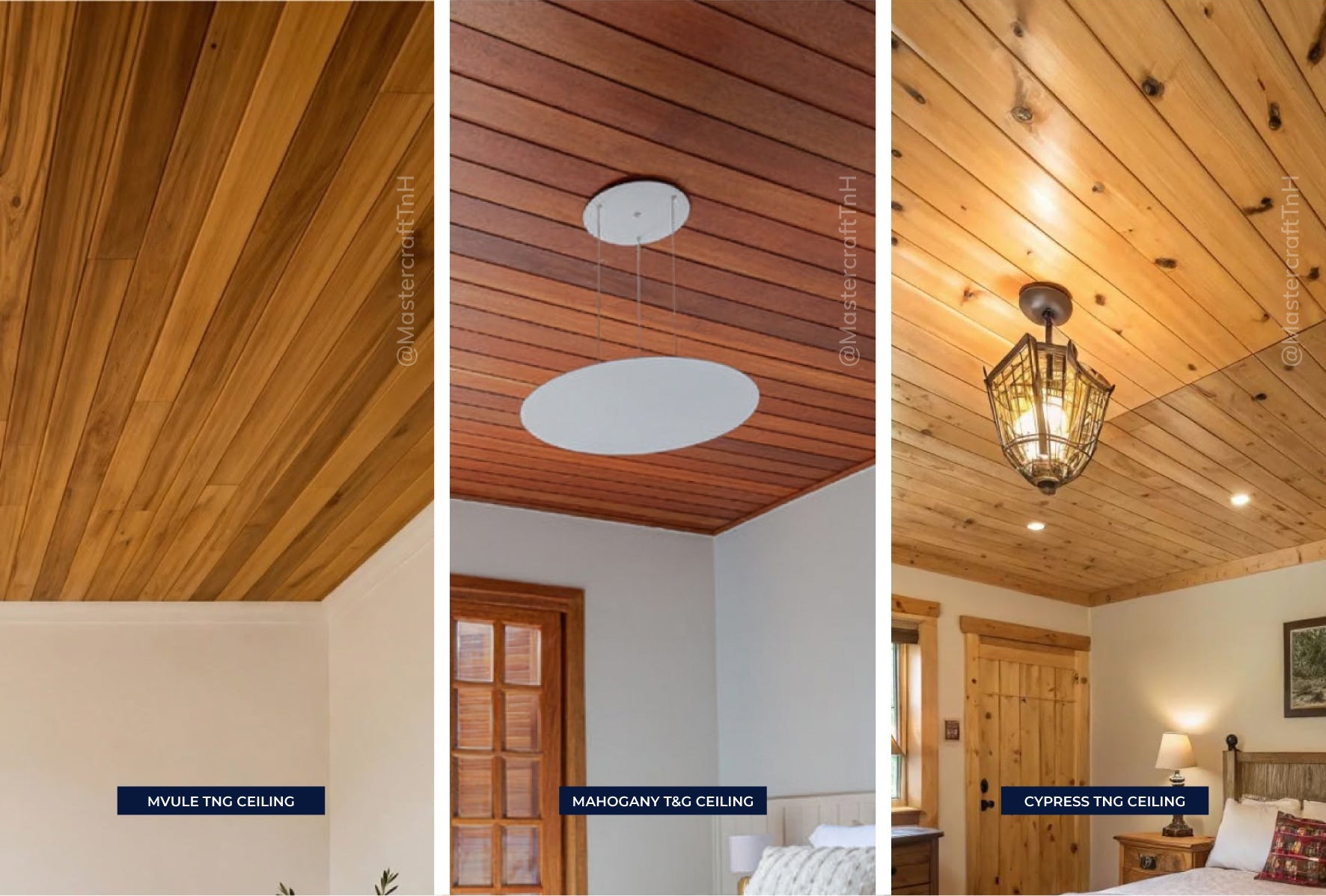
Mahogany may suit interior floors where the desired appearance and intended level of use align with the selected species and finish. It is also well suited to decorative ceilings and interior panelling, where colour, grain and visual consistency may matter more than maximum surface hardness. Cypress offers a practical alternative for many ceilings, interior linings and selected joinery applications, particularly when budget and weight matter. Its suitability depends on the specific product grade and intended use; it should not automatically be treated as interchangeable with hardwood in demanding applications.
Two Illustrative Kenyan Project Scenarios
The following examples are hypothetical scenarios, not documented Mastercraft client projects. They show how contractors can apply the comparison when preparing a specification.
Scenario 1: A premium residential development in Nairobi. A contractor needs matching internal doors, decorative panels and selected built-in cabinetry across several rooms. The architect wants a warm, refined finish, while the developer wants consistent appearance across the project. The contractor shortlists mahogany, confirms the precise commercial species and inspects sample boards for colour, grain and machining quality. The material schedule specifies dimensions, moisture content, finish and hardware requirements before the supplier prices the complete order. Mahogany becomes the preferred option because it meets the aesthetic and joinery brief, not because it is automatically superior to mvule.
Scenario 2: A high-use hospitality refurbishment. A project team is upgrading selected timber floors, stair components and robust furniture in a property that experiences frequent daily use. Mvule is considered for components where its density and natural durability offer a useful fit. The contractor checks board quality, confirms moisture content, reviews the installation system and selects a compatible finish. Cypress is considered separately for suitable ceiling areas to keep the material specification aligned with the lower demands of that application. The result is a mixed-species schedule in which each material has a defined role.
The lesson from both scenarios is that the best timber schedule is not necessarily the one using the same hardwood everywhere. It is the one that matches the performance, visual and budget requirements of each component.
Contractor’s Buying and Specification Checklist
Before placing an order for mahogany or mvule, write a clear specification that can be checked when the timber arrives. This reduces ambiguity between the contractor, supplier, fabricator and client.
-
Species identification: State mahogany or mvule and request botanical or commercial identification where available. Do not accept a substitution without approval.
-
Grade and defects: Define the required appearance and quality, including acceptable knots, splits, checks, sapwood and grain variation. Specify a recognised grading basis where the project requires one.
-
Moisture content: State the required moisture range for the intended service environment and verify deliveries with a suitable meter. Use the contract specification and applicable standards rather than relying on a generic number.
-
Dimensions: Specify finished thickness, width and length, allowing for machining and trimming. Confirm whether quoted dimensions are nominal, sawn or finished.
-
Thickness and design: Choose dimensions based on the approved drawings and component design. Door leaves, frames, flooring boards and ceiling linings have different requirements; do not prescribe one thickness for every application.
-
Machining and finishing: Confirm whether the timber will be supplied rough-sawn, planed, profiled, sanded or pre-finished. Agree on the finish sample before processing the full batch.
-
Fixings and joints: Select hinges, screws, adhesives and joint details suitable for the timber, the component and its exposure. Pre-drill where appropriate to reduce splitting, particularly near board ends.
-
Quantity and wastage: Include allowances for cutting, defects, grain matching and the agreed installation method. Calculate from finished component sizes.
-
Delivery and storage: Confirm delivery dates, transport conditions and unloading arrangements. Stack timber level, off the ground and under cover, with airflow and protection from direct weather.
-
Documentation: Keep the approved material schedule, quotation, delivery note, moisture readings and any available origin or treatment documents.
For formal construction work, align the specification with the National Building Code 2024 and the project engineer's requirements. ISO's wood moisture-testing standard provides a reference for understanding moisture measurements. The specification should identify acceptance criteria before timber arrives, not after defects become a dispute.
Installation, Maintenance and Lifecycle Value
Timber is a natural material, so good installation begins with an understanding of moisture. Nairobi's indoor environment, coastal humidity, ventilated mountain locations and buildings with damp substrates can expose timber to different conditions. The wood will respond to changes in its surroundings, and the extent of movement depends on the species, grain orientation, moisture change and component design. The ISO moisture-content testing reference helps explain why moisture must be measured rather than assumed.
Allow suitable movement in flooring and other components where the manufacturer's system requires it. Prevent water from collecting against door frames, protect exposed end grain as appropriate, and apply a compatible finish according to its manufacturer's instructions. For floors, keep cleaning methods consistent with the finish system and address leaks promptly. For doors and ceilings, inspect joints, coatings, fixings and signs of moisture damage during routine building maintenance.
There is no defensible single lifespan that applies to every mahogany or mvule installation. Service life depends on the verified species, timber quality, exposure, workmanship, maintenance and severity of use. A well-specified, properly installed hardwood component can offer long service, but the contractor should avoid guaranteeing a number of years without a product-specific basis. Lifecycle cost should include the purchase price, machining, installation, finish, maintenance and likely replacement requirements.
Mahogany, Mvule or Cypress: The Final Recommendation
Use this matrix as an initial guide, then verify the specific timber and installation conditions before finalising the schedule.
|
Application |
Preferred starting point |
Why |
What to verify |
|---|---|---|---|
|
Premium internal doors |
Mahogany |
Refined grain and finishing potential |
Species, grade, moisture and door construction |
|
Robust or high-use doors |
Mvule or mahogany |
Both may suit the brief depending on design and exposure |
Weight, hardware, durability and moisture |
|
Door frames |
Mahogany or mvule |
Both can be suitable when correctly specified |
Section size, straightness, fixings and exposure |
|
Hardwood flooring |
Mvule or suitable mahogany |
Selection can balance wear, appearance and budget |
Flooring grade, moisture, substrate and finish |
|
Decorative ceilings |
Mahogany or cypress |
Mahogany prioritises premium appearance; cypress can suit lighter, cost-conscious designs |
Profile, grade, fire and applicable building requirements |
|
General interior joinery |
Mahogany or cypress |
Choice depends on finish, use and budget |
Product specification and machining requirements |
|
Selected high-use furniture |
Mvule or mahogany |
Mvule can favour wear resistance; mahogany can favour refined appearance |
Joinery, load requirements, finish and grain |
For mahogany vs mvule in Kenya, the strongest recommendation is to select by component rather than by reputation. Choose mahogany when appearance, detailed joinery and a refined finish lead the brief. Choose mvule when its density and natural durability suit the expected wear and application. Choose cypress for appropriate interior components where the specification supports a softwood solution and the project benefits from its cost profile.
Mastercraft Timber & Hardware can use this decision framework to help contractors compare material schedules, check dimensions and plan their orders. Before purchasing, request a quotation based on the actual project specification rather than relying on a general price per metre.
Conclusion
The best hardwood is the one that meets the project's performance requirements, appearance, budget and installation conditions. Mahogany and mvule both have valuable roles in Kenyan construction, but neither should be selected on name or price alone. Confirm the species, grade, moisture content, dimensions, finish and sourcing before approving the material. Compare like-for-like quotations, plan for correct installation and maintain the finished components. With a clear specification and a reliable supply partner, contractors can make informed choices that balance quality, appearance and long-term value.